
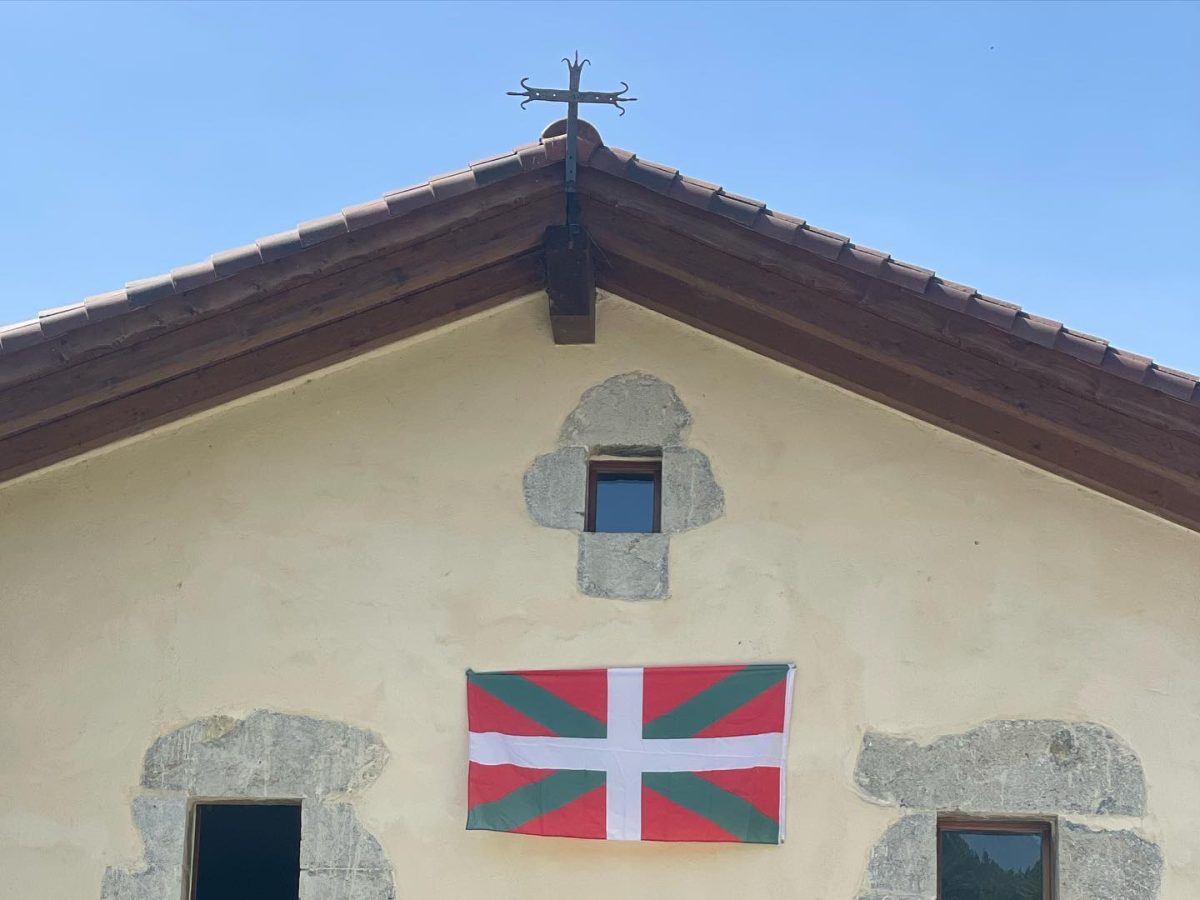
Gospel Fermentation in Basque Country — A Three-Part Series – Part 1 of 3
There is a moment in Matthew 13 that is easy to read too quickly.
Jesus has been teaching all day by the lake. The crowds are pressing in. The religious establishment is watching. The disciples are confused. And in the middle of a series of parables about seeds and soil and harvests and treasure, Jesus says this:
The Kingdom of Heaven is like yeast that a woman took and hid in three measures of flour, until it was all leavened.
That’s it. Two verses. One image. And then he moves on.
But if you slow down and stay with it, this small parable contains some of the most subversive and practically significant theology Jesus ever taught. It is not decoration. It is not a warm illustration to soften harder material. It is a direct counter-claim to every assumption we carry about how kingdoms work, how movements spread, and what faithful mission actually looks like.
Everything that follows in this series is an attempt to take it seriously.
The Woman Hid It
The first thing to notice is the verb. The woman did not add the yeast, or mix it, or place it. She hid it.
This is not a translation accident. The Greek word — enkrypto — means to conceal, to hide within, to tuck out of sight. It is the same root from which we get the word encrypt. The Kingdom of Heaven, Jesus says, works by being hidden in the material it is meant to transform.
This is theologically radical. Every instinct of institutional religion runs in the opposite direction — toward visibility, toward impressiveness, toward being seen and recognized and counted. We build platforms. We measure attendance. We announce initiatives. We want the Kingdom to be legible, trackable, and attributable to our efforts.
Jesus describes something that works precisely by disappearing into the material.
This is not a counsel of passivity. The woman is actively, intentionally hiding the yeast. She knows what she is doing and why. But the mode of the Kingdom’s advance is hiddenness, not visibility. Presence, not platform. Depth, not reach.
For anyone serious about mission in a post-Christian culture — where institutional Christianity has largely lost its public credibility and where the announcement of religious programs is met with polite indifference at best — this is not just interesting theology. It is a survival manual.
Three Measures of Flour
The second thing to notice is the quantity, and it requires a moment of cultural translation.
Three measures of flour — in the Greek, tria sata — is approximately forty liters. Enough dough to feed somewhere between one hundred and one hundred and fifty people. This is not a woman baking bread for her family. This is a quantity so excessive it would have struck Jesus’ original audience as almost comic.
Which is exactly the point.
The parable is not describing a modest, proportional process — a little yeast for a little dough, producing a reasonable loaf. It is describing a tiny, invisible agent transforming an absurd, overwhelming quantity of material. The disproportion between the yeast and the flour is the point. The Kingdom works at a scale that makes no sense given the apparent size of what was hidden.
This is a word for every mission team that feels small. Every church planter staring at a hard city. Every disciple-maker whose work feels invisible and whose numbers feel embarrassing compared to the scale of the need.
The disproportion is not a problem to be solved by better strategy or more resources. It is the very nature of the thing. A little yeast. An absurd amount of flour. The whole batch leavened.
That is how the Kingdom works. That has always been how the Kingdom works.
Until It Was All Leavened
The third thing to notice is the endpoint. Not some of the dough. Not most of it. All of it. The whole batch.
Jesus is not describing a minority movement carving out a sustainable niche in a hostile culture. He is describing a total transformation — the entire material changed by the presence of the yeast. The Kingdom of Heaven, when it is genuinely present and genuinely working, does not merely influence. It permeates.
This has two implications that cut in different directions.
The first is a word of extraordinary hope. The goal is not to maintain a faithful remnant in a culture moving away from God. The goal is the leavening of the whole batch. However thick the dough, however resistant the culture, however long the process — the endpoint Jesus describes is comprehensive. The whole thing.
The second is a word of patience. Fermentation cannot be rushed. You cannot speed up yeast by wanting the dough to rise faster. The process has its own time, its own invisible momentum, its own biology. Mission that is in a hurry — that needs to show results on a quarterly report, that measures success in months rather than decades — will abandon the process before the dough has risen.
Until it was all leavened. The until is doing quiet but enormous work in that sentence.
The Woman at the Center
It is worth pausing on the agent Jesus chooses for this parable.
In the parallel parable just before it — the mustard seed — the sower is male, working in a field, doing the recognizable work of agriculture. Here, the agent is a woman, working in a kitchen, doing the unrecorded and unspectacular work of making bread.
Jesus is not making an incidental choice. He is placing the advance of the Kingdom in the hands of the unseen, the ordinary, the unheroic. The woman working with flour is not on a stage. She is not building a platform. She is not being watched or celebrated or resourced. She is simply doing what she does, with what she has, in the most domestic space imaginable.
And the whole batch is leavened.
This is a rebuke to every model of mission that depends on exceptional people doing exceptional things in exceptional contexts. The Kingdom advances through ordinary faithfulness, embedded in ordinary life, working through ordinary relationships — in kitchens and workplaces and friendship networks and long meals, by people whose names will not appear in any ministry report.
The woman hides the yeast and the dough rises. That is the whole story.
The Counter-Kingdom Claim
Matthew 13 does not exist in a vacuum. It sits in a specific narrative moment — Jesus is under pressure from the religious establishment, his own family thinks he has lost his mind, and the political shadow of Rome lies over everything. The crowds are drawn to him but confused about what kind of Kingdom he is announcing.
Every competing model of how kingdoms work is visible, powerful, and top-down. Caesar’s kingdom advances through legions and proclamations and the architecture of empire. The Pharisees’ kingdom advances through public observance, religious reputation, and the performance of righteousness. Even the Zealots’ vision of the Kingdom is a military counter-empire — power meeting power, force answering force.
Jesus describes yeast.
Hidden in dough. Working invisibly. Transforming from within. Irreversible once begun. Producing an abundance wildly disproportionate to its apparent size.
This is not a modest or timid vision. It is a radical counter-claim about the nature of power, the nature of change, and the nature of the Kingdom of God. It says: the way the world changes is not the way you think. The way movements spread is not the way empires spread. The way the Kingdom comes is not the way kingdoms come.
It comes hidden. It comes through ordinary people. It comes from within. It comes slowly, and then all at once.
What This Means for Mission
If Jesus is right about how the Kingdom spreads — and we should assume he is — then the implications for mission are significant and uncomfortable.
It means the most important work happening in any city is probably not the most visible work. The church that draws the crowds may not be doing the deepest leavening. The missionary with the impressive newsletter may not be the one in whose life the yeast is most genuinely present. The movement that gets written about may not be the one that is actually fermenting.
It means the question is this working? needs to be held much more lightly than we tend to hold it. Yeast does not show its work. It works in hiddenness, and the evidence of its work is the rising of the dough — which comes after a long period in which nothing visible appears to be happening.
It means the size of the team, the scale of the resources, and the impressiveness of the strategy are not reliable indicators of Kingdom impact. Three measures of flour. A little yeast. A woman in a kitchen. The whole batch leavened.
And it means the most urgent question for anyone in mission is not what will work? but something more fundamental:
Is the yeast genuinely present? Is there real life here — the life of Jesus, working from within, transforming what it touches — or are we managing a program that sits on top of the dough and calls itself fermentation?
That is the question the parable will not let us escape. And it is the question that everything else in this series is an attempt to answer, in the specific and beautiful and resistant and longing dough of Basque Country.
In the next post, we’ll look at what it actually means to carry that yeast — the genetic code of a reproducing Jesus movement, what lordship under pressure produces, and why the smallest unit matters more than the largest vision.