The txoko — sociedad gastronómica — is one of the oldest, strangest, and most quietly radical institutions in European cultural history. Here is the full story.
There is a version of history in which Francisco Franco succeeded. Not in the grand sense — he didn’t hold power forever, and Spain did eventually become a democracy. But in the smaller, more intimate sense: the erasure of a people’s inner life. Their language. Their rituals. The particular way they understood themselves to belong to a place and to each other.
For the Basques, that erasure was attempted by Franco with real ferocity. After the fall of the Republic, Euskara — the ancient, linguistically isolated Basque language, unrelated to any other tongue on earth — was banned in public. Basque priests who refused the ban and spoke Basque in the church were martyred. Basque cultural institutions were shuttered. The very idea of a distinct Basque identity was treated as a threat to the unity of Spain, to be suppressed by law, by force, and by the slow grinding pressure of a state that controlled what you could say, sing, teach, and celebrate in public.
What Franco’s regime did not fully account for was a room with a kitchen in it.
What Is a Txoko?
The txoko — the Basque gastronomic society, sometimes called a sociedad gastronómica — looks, on the surface, like something designed to avoid attention. A private dining club. Men gathering to cook. A locked door, a long table, good wine. Nothing to see here, señor.
This is precisely what made it effective.
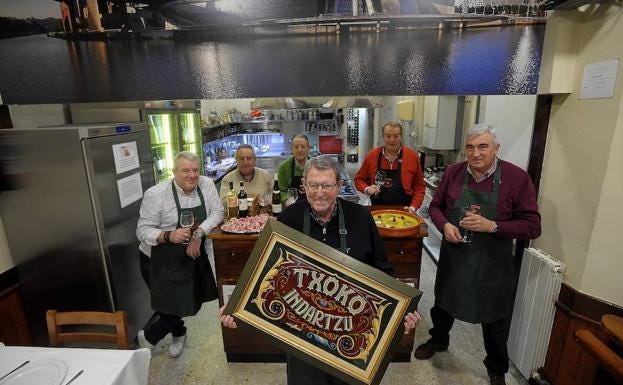
The tradition is generally traced to San Sebastián (Donostia) in the mid-19th century. The oldest recognized society, La Fraternal, was founded around 1843. But the impulse behind it is older still — rooted in informal practices of Basque rural life, in the auzolan (the tradition of communal neighborhood labor), and in the deep social importance of the baserri, the farmhouse, as a unit of shared life and identity. The txoko was, from the beginning, an urban expression of something ancient: the idea that certain things are best done together, by choice, in a space you have claimed as your own.
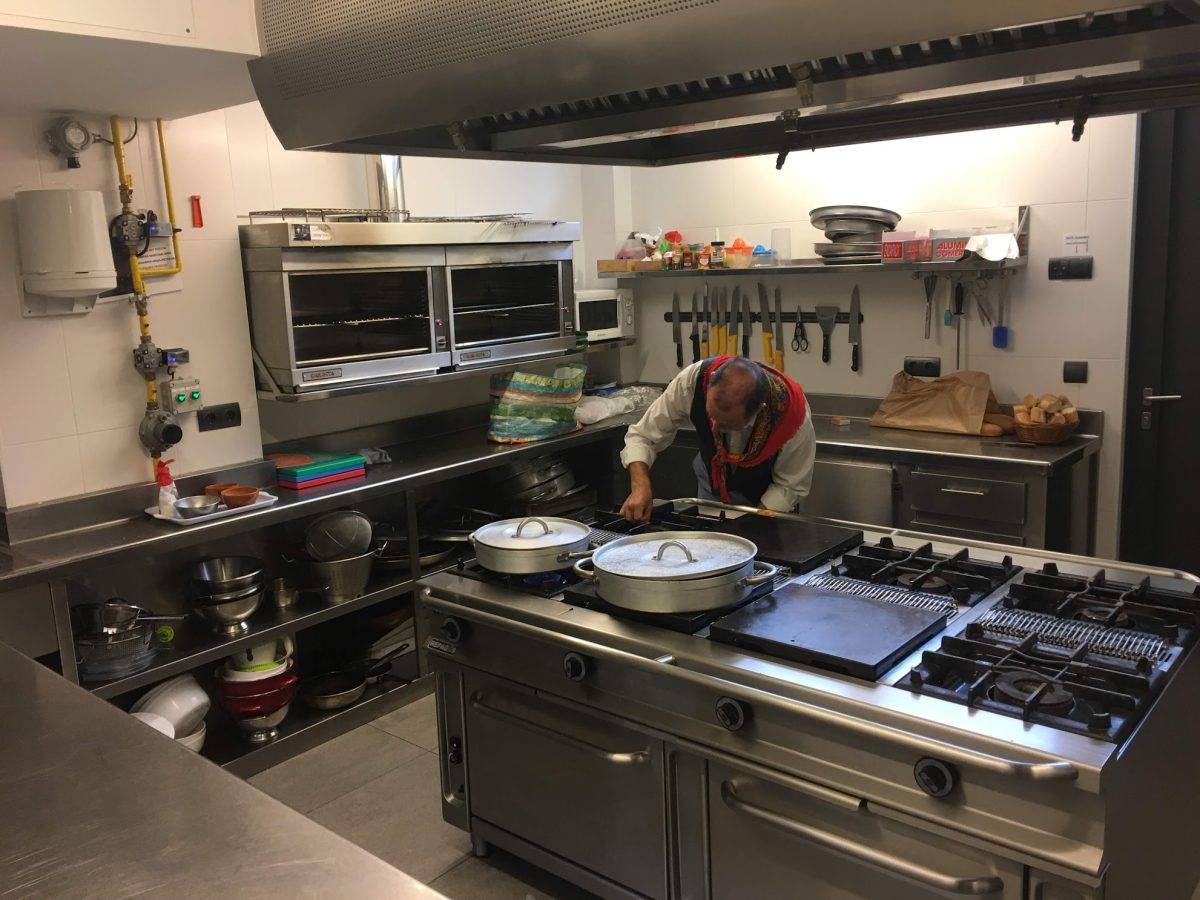
Membership is by invitation, with long waiting lists in the more established societies. Members pay dues to maintain a well-equipped communal kitchen and dining room. When someone wants to host, they reserve the space, buy their own ingredients, and cook — not for a restaurant table, but for friends and fellow members. There is no professional chef. No waitstaff for the intimate sessions. The preparation of food is the social ritual itself, and a member’s reputation rests on their skill and generosity at the stove.
The emphasis on cooking rather than being served is not incidental. It reflects a democratic, participatory ethos that runs through the institution. The txoko or sociedad is not a place to be impressed by someone else’s labor. It is a place to bring your own.
The Ancient Roots of a Modern Ritual
To understand why the txoko matters, you have to understand the Basque relationship with food — which is unlike almost anywhere else in Europe.
The Basques have always treated the table with a seriousness that outsiders sometimes mistake for eccentricity. The culto a la mesa — the cult of the table — is not a regional preference. It is a philosophical position. To eat well, to cook carefully, to gather around a shared meal, is to assert something about what life is for and who you are. In a culture that prizes communal identity and rootedness to place, the meal is an act of self-definition.
This is not a modern affectation. The Basque Country’s cuisine — built around the extraordinary produce of the northern coast, the Cantabrian Sea, and the green interior — has long been considered among the finest regional traditions in Europe. Dishes like bacalao al pil-pil, marmitako, txangurro, and the seemingly infinite variations on salt cod and seafood represent centuries of accumulated knowledge, passed down not through written recipe books but through practice, through watching and doing, through exactly the kind of communal cooking that the txoko has always preserved and transmitted.
There is also something deeper — a quasi-spiritual dimension that Basque writers and cultural historians have explored at length. The txoko, in this reading, is connected to very old ideas about the sacred nature of sharing food: that to cook for someone is an act of care bordering on the ceremonial, and that to eat together is to affirm a bond that goes beyond mere sociability. The repetition of the gathering, the seasonal rhythms of the kitchen, the particular recipes carried from generation to generation — these have the quality of liturgy. Not religious liturgy, exactly, but something with the same weight of meaning and the same resistance to being casually discarded.
The Locked Door
By the time Franco came to power, the txoko tradition was already nearly a century old and deeply embedded in Basque social life. What the dictatorship did, without quite intending to, was transform it from a cultural institution into a survival mechanism.
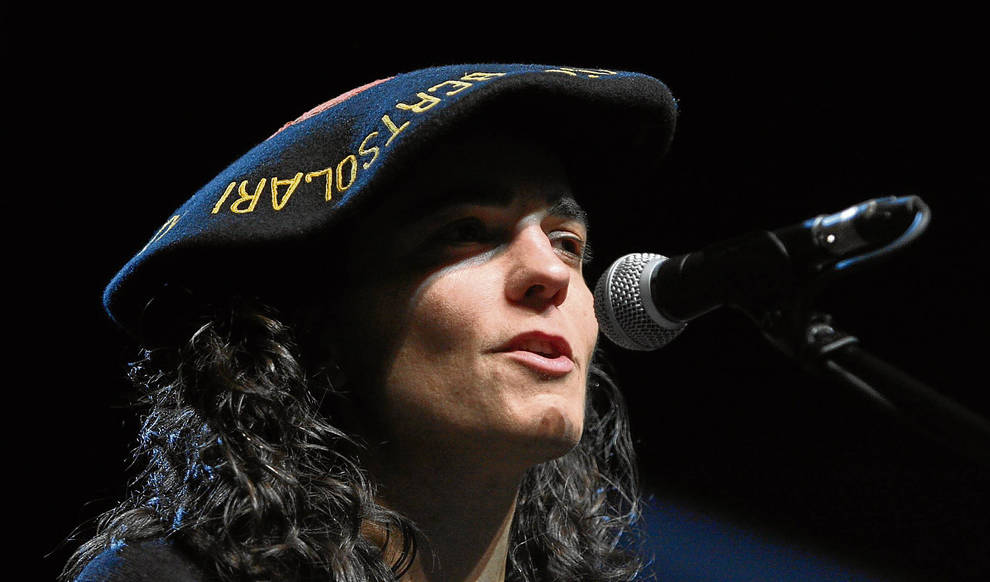
Because the txoko was private — membership by invitation, doors closed to the public and to state scrutiny — it existed in a legal and surveillance grey zone that public life did not. Inside those walls, men spoke Euskara freely at a time when the language was banned from public space. They sang bertsolari — the ancient tradition of improvised Basque verse — when performing it outside would invite trouble. They debated politics, told stories, maintained the social fabric of communities that the regime was methodically trying to unravel.
This is not a metaphor. The txoko was, in concrete and practical terms, one of the few spaces in the Basque Country where cultural life could continue with something approaching freedom through the long decades of the dictatorship.
Consider what this means. When we talk about cultural resistance under authoritarian regimes, we tend to imagine dramatic gestures — samizdat literature, underground presses, clandestine political meetings. What the Basques had, in part, was dinner. The audacity of it is almost funny, until you think about how it actually worked: a regime that controls public space cannot easily control what happens in a locked room, especially if that room is ostensibly just about food.
Franco’s regime understood the connection between Basque identity and Basque cuisine, at least dimly — the two were linked in ways that couldn’t be easily disentangled. To suppress one was, in some sense, to suppress the other. But suppressing how people ate, behind closed doors, in private, was harder than suppressing what they said in public. The txoko’s very ordinariness was its armor. It was a cooking club. What could be less threatening than a cooking club?
What We Miss When We Romanticize This
It would be easy, and not entirely honest, to stop here — the plucky cooking club outwitting the fascist state, resistance simmering alongside the bacalao al pil-pil, a warm story about food and freedom.
The reality is messier.
The txoko was also, for most of its history, an exclusively male institution — a fact that reflects real exclusions in Basque social life that had nothing to do with Franco. Women cooked in homes; men cooked in societies. The domestic was private and female; the communal was public and male. The txoko preserved Basque culture, yes, but it did so within a social structure that left half of that culture’s living carriers at the door.
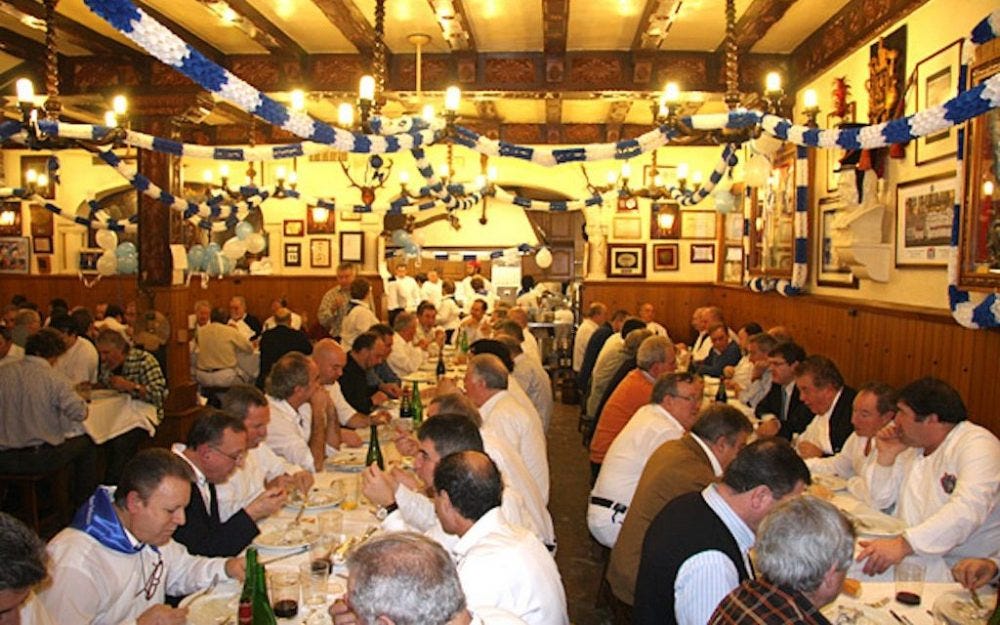
The reasoning given for this exclusion was always somewhat circular: the sociedad was a space apart from domestic life, and since women were associated with the domestic, their presence would undermine its character. This logic conveniently ignored the fact that the “domestic” cooking it claimed to escape was largely performed by women — and that the culinary knowledge the txoko took such pride in transmitting had been kept alive, in kitchens and farmhouses across the Basque Country, largely by women.
This tension has been reckoned with unevenly. Many societies now admit women as full members, and the trend is clearly in that direction. Some older clubs do not, and defend the practice as tradition. The argument is hard to make without irony: the tradition was itself forged in resistance to the suppression of a people, by an institution that practiced its own form of suppression. The Basques of all people should understand what it costs a culture when half its members are told they don’t quite belong.
The Long Echo
Franco died in 1975. The Basque Country regained significant autonomy under Spain’s democratic transition. Euskara returned to public life — to schools, to street signs, to official documents. The long suppression ended.
The txoko did not disappear. If anything, it flourished.
Today there are estimated to be well over a thousand gastronomic societies in the Basque Country alone, with tens of thousands of members. They are no longer primarily acts of resistance — they are acts of culture, of community, of pleasure pursued with extraordinary seriousness. And the culinary intensity they helped sustain has had remarkable consequences: the Basque Country now produces more Michelin-starred restaurants per capita than almost anywhere on earth. Many of the architects of the Nueva Cocina Vasca movement of the 1970s and 80s — chefs like Juan Mari Arzak and Pedro Subijana, who helped redefine what European cooking could be — grew up inside or alongside the txoko culture, surrounded by serious amateur cooks who believed that how you prepared a meal was a matter of genuine importance.
That is not a coincidence. It is a lineage.
Why It Matters Now
The txoko exists in its current form — vibrant, proud, deeply embedded in Basque life — partly because it was forged under pressure. Because it had to be more than a dining club. Because, for a few decades in the middle of the last century, walking into a room with a kitchen and a long table and closing the door behind you was a small but genuine act of defiance.
The lesson goes beyond the Basques, beyond Spain, beyond the 20th century. Culture does not only survive in archives and declarations and official acts of preservation. It survives in practice — in the repeated, embodied acts that say: this is how we do things, this is who we are, and you have not taken it from us. Sometimes that practice is political. Sometimes it is artistic. Sometimes it is, stubbornly and defiantly, dinner.
The txoko is proof that the most durable forms of resistance are often the ones that look like something else entirely. That what appears ordinary — a room, a stove, friends gathered around a table — can carry the whole weight of a civilization’s refusal to disappear.
Franco tried to erase a people. A cooking club — a room, a locked door, a pot on the stove — helped make sure he failed.
The Basque gastronomic societies continue to operate across the Basque Country today. The oldest, La Fraternal, was founded in San Sebastián in 1843 — nearly 75 years before Franco was born.