
 on March 20, 2026
Roots of an Ancient People: Identity, Language, and the Mystery of Origin
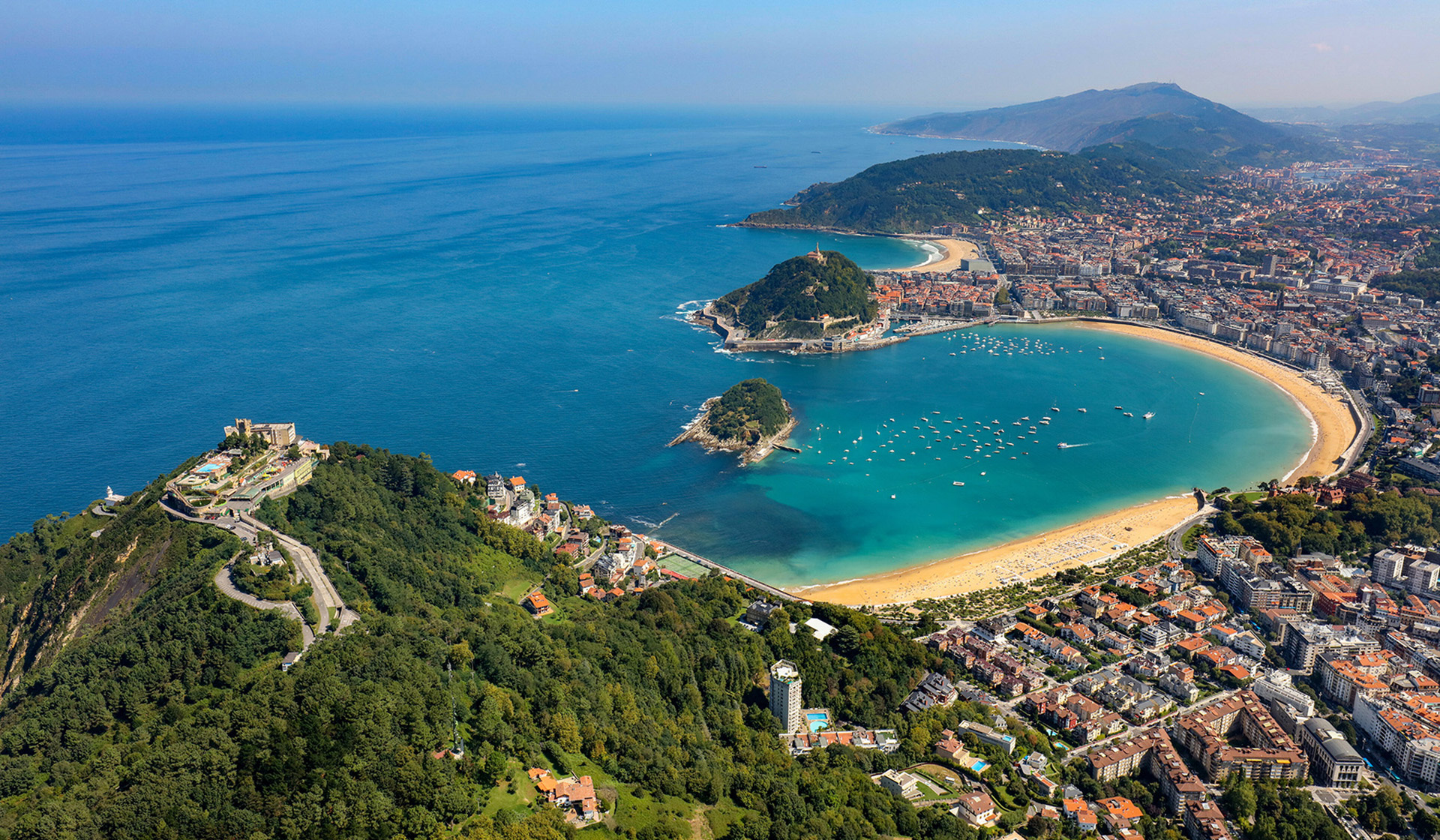
There is a city at the edge of the Cantabrian Sea whose very name is a sermon — if anyone still knows how to read it.
Donostia. The word is Basque. It means Saint Sebastian.
Before we talk about the Gospel in this city, we have to sit with the city itself. Because Donostia is not just a beautiful place with a complicated history. It is a place that has been asking the deepest human questions for longer than almost anyone else in Europe — and doing so in a language no one else on earth has ever spoken.
The People No One Can Explain
Euskara — the Basque language — is a language isolate. In the entire history of human linguistics, no one has found a single language it is related to. Not Indo-European. Not Semitic. Not anything. The Basques were here before the great migrations that shaped the rest of the continent. Before Celtic. Before Latin. Before the Roman Empire dreamed of the Pyrenees.
They are, in every measurable sense, the oldest people in Western Europe — and they have been fiercely, almost miraculously, themselves ever since.
They are unlike anyone else. They have always known it. The question no language can answer is: why?
A City Named After a Martyr
Sometime in the 12th century, King Sancho VI of Navarre granted a charter to a small settlement at the foot of Monte Urgull, where the Urumea River meets the Cantabrian Sea. The settlement grew. It was burned, rebuilt, burned again, rebuilt again. And through all of it, it kept the name the Basques had given it: Done Sebastiane — Lord Sebastian. Donostia.
Sebastian was a Roman soldier in the 3rd century. He served in the elite Praetorian Guard under Emperor Diocletian — trusted, capable, close to power. And then his Christian faith was discovered. He was condemned, bound to a post, and shot through with arrows. Left for dead. A Christian woman named Irene found him, nursed him back to health. And Sebastian, upon recovering, walked back to the emperor and confronted him again — until this time he was beaten to death.
A man shot full of arrows for his faith became the name of this city. His image stands above the portal of the Baroque Basilica of Santa María in the old town, watching every generation of donostiarras come and go — to market, to festival, to pintxos, to funerals. He has been watching for centuries. Most people pass without looking up.
Before the Church, There Were the Mountains
The Basques did not arrive at spirituality when Christianity came. They were already there — deeply, anciently there. The goddess Mari ruled the storms and the mountains. Basajaun — “the lord of the forest” — guarded the wild places and, in some stories, taught humans the secrets of iron-working and agriculture. Their sacred sites were mountain peaks and caves, places where the earth felt thin and the something-beyond pressed close.
This matters because it tells us something: these are not a people without spiritual hunger. They are a people whose spiritual hunger has been running for millennia, in a direction no one else fully understands, in a language no one else has ever spoken.
When Christianity came to the Basque Country, it found people who already knew that the world was not flat, not merely physical, not simply explainable. It found people who had always been looking toward something beyond.
The longing was already there. The question was always whether the thing being longed for was real — and whether it had a name.
The Spiritual Wound
Here is something worth sitting with: the Basques are the oldest continuous people in Western Europe, and no one can explain them. Not biologists. Not historians. Not linguists. They simply are. Their language, their blood, their identity — it all points back and back and back to a beginning that science cannot reach.
That is not just a puzzle for academics. It is a spiritual wound dressed up as cultural pride. Because if you don’t know where you came from, you don’t fully know who you are. And if you don’t know who you are, you defend your identity all the harder — because the alternative is to admit that you are, beneath all the culture and the language and the flags and the drumming, somehow unmoored.
The wound: A deep rootlessness beneath the pride — an ancient identity with no clear origin, fiercely defended yet spiritually unanchored. The pride of uniqueness can mask a longing for the One who made them unique.
The Gospel Bridge
John’s Gospel does not begin with a story. It begins with a declaration: In the beginning was the Word. Before anything was. Before language, before people, before the Pyrenees rose from the sea — the Word was there. And the Word became flesh and moved into the neighbourhood.
The God of the Bible is not the God of vague origins and distant causes. He is the God who calls people by name. “I have called you by name; you are mine” (Isaiah 43:1). He made all nations from one man and determined the times and places of their habitation — so that they would seek him, and perhaps feel their way toward him and find him (Acts 17:26–27).
This is a remarkable claim when you hold it next to the Basques. If God made the nations, He made the Basques too. Their ancient origin is not a mystery that escaped God. It is a mystery God holds. Their language, which no one else speaks, is known to the One who invented language. Their longing for origin has an answer. Their uniqueness has an author.
The city is named for Sebastian. Sebastian died for Jesus. Jesus is the reason there is a Donostia at all. That is not a coincidence to be dismissed. It is an invitation to look up — as few people passing the Basilica of Santa María any longer do — and ask: what if the name means something?
Key Scriptures
- John 1:1–14 — “In the beginning was the Word… and the Word became flesh and dwelt among us.”
- Isaiah 43:1 — “I have called you by name; you are mine.”
- Acts 17:26–27 — “From one man he made all the nations… so that they would seek him and perhaps reach out for him and find him.”
For Reflection
What does it mean to you that the oldest people in Western Europe have been asking the deepest questions the longest — and that the city they built is named after a man who died for Jesus?
Where do you see the same longing for origin and belonging in the people around you? And what would it mean for them to discover that the God who made all peoples made them in particular?
Continue the Series
- Part 1: Roots of an Ancient People (you are here)
- Part 2: Faith, Fire, and Conquest — The Church, Ignatius of Loyola, and Spiritual Ambition
- Part 3: Blood, Division, and the Long Shadow — ETA, Violence, and the Wounded City
- Part 4: Beautiful Shell, Empty Center — Secularism, Longing, and the Open Door
If this post resonated with you, share it with someone who loves history, cares about the Basque Country, or is asking questions about faith and culture. The conversation is just beginning.
About This Series “The City Named for a Saint” is a four-part exploration of Donostia-San Sebastián — its history, its people, its spiritual wounds, and the way the Gospel speaks into each of them. It is written for small groups, church plants, outreach contexts among Basque communities, and anyone drawn to the intersection of culture and faith.