
A word for anyone who wonders whether they still belong
Everyone who has ever sat in a txoko knows that the locked door is not the point. The locked door is just what makes the opening of it mean something.
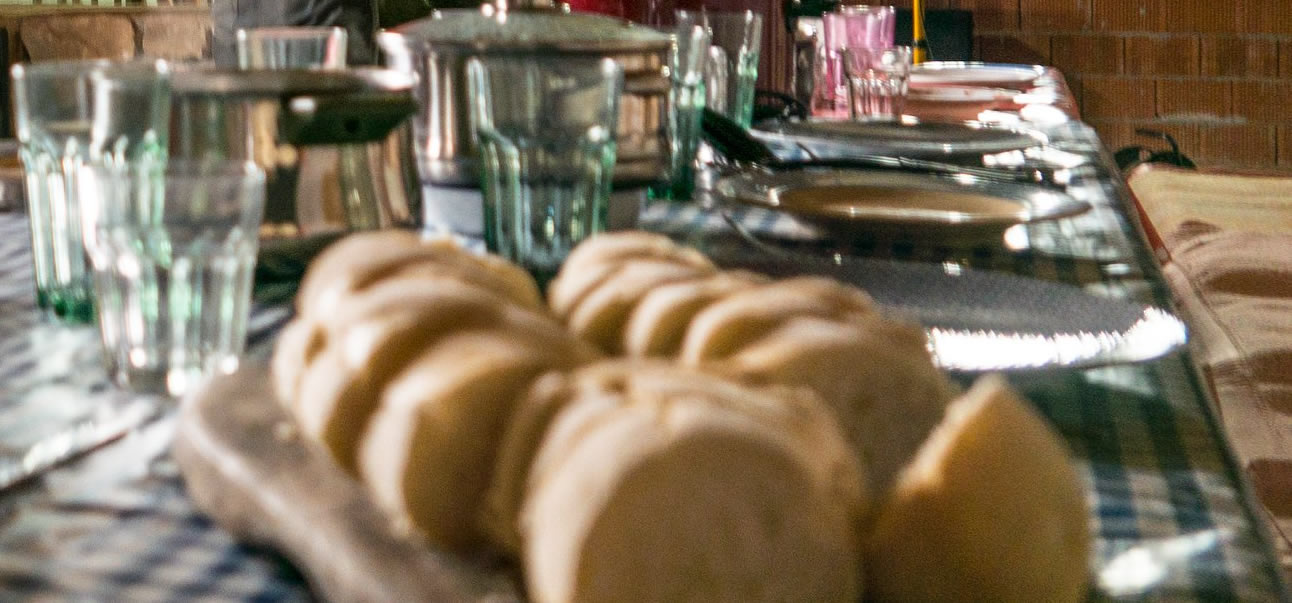
You know the feeling. The key turns. The smell of the wood and the wine and whatever is already on the stove reaches you before the light does. The table is long. The chairs are mismatched in the way that means they have been here for years, brought by different people at different times, and nobody thought to match them because the matching was never the point. People are already talking. Someone is laughing about something that happened twenty years ago. You sit down and within ten minutes you have forgotten that the world outside has any claim on you at all.
That feeling — that specific shift that happens when a door opens for you and you realise you were expected — is one of the truest things the Basque Country knows. It is not hospitality in the thin sense of the word. It is something older and heavier. It is the experience of belonging that is not contingent on your performance that evening, not dependent on whether you are interesting or put-together or have anything useful to contribute. You belong because you belong. The place was set before you arrived.
I want to tell you about someone who sets a table like that. And I want to be honest with you about why it took me a long time to believe the invitation was actually for me.
— — —
WHAT MANY OF US WERE LEFT WITH
A lot of us who grew up here carry a complicated relationship with the word God. Not because we thought carefully about theology and came to considered conclusions, but because the version of religion we inherited felt less like an open txoko and more like a set of requirements for earning your place at a table you were never quite sure you deserved.
The institution had its reasons. History had its weight. Some of what was handed down was good and some of it was genuinely damaging, and most of us stopped trying to sort which was which because the whole thing had become too entangled — with Franco, with obligation, with the particular flavour of guilt that arrives not because you did a specific thing wrong but simply because you exist and fall short of something unnamed.
If that is where you are, I am not going to ask you to pretend it was not like that. The disillusionment is real. The distance from the institution is understandable. You are not the first person to have walked away from a table that turned out to have hidden conditions on the invitation.
But I want to make a distinction that took me longer than it should have to make: the institution is not the same as Jesus. And what Jesus offers is so different from what was sometimes offered in his name that it can be hard at first to recognise they are supposed to be connected.
The institution is not the same as Jesus. What he offers is so different from what was sometimes offered in his name that it can be hard at first to see the connection.
— — —
A VERY OLD POEM ABOUT A TABLE
There is a poem in the Hebrew scriptures — Psalm 23 — that most people have heard at funerals and therefore associate with endings. That is a shame, because it is really about something that happens in the middle of life, in the middle of difficulty, in the middle of exactly the kind of place where you would not expect anyone to lay a table for you.
The poem describes God as a shepherd. It moves through green pastures and still water and dark valleys — the whole range of what a life actually looks like — and then, just when you might expect it to end with arrival somewhere safe, it says this:
“You prepare a table before me in the presence of my enemies.” — Psalm 23:5
Not after the enemies are gone. Not once you have sorted yourself out. Not when you finally deserve it. In the presence of the enemies. In the middle of the difficulty. While the things that threaten you are still very much present and the situation has not resolved.
The shepherd sets the table there. In that exact place. And he sets it for you.
What the txoko does for an evening, this shepherd does for a life. He prepares the space. He expects you. He is not waiting to see whether you perform well enough to deserve the chair. The chair was yours before you walked through the door.
— — —
THE SHEPHERD WHO COMES LOOKING
Jesus took this image of the shepherd and made it the centre of how he described himself. In John 10, he says: I am the good shepherd. I know my own and my own know me. The knowing is mutual and personal — not institutional, not transactional, not dependent on whether you have your paperwork in order. He knows your name. Not your category. Not your file. You.
And then he told a story that is almost uncomfortable in how extravagant it is. A shepherd has a hundred sheep. One wanders — gets lost, gets tangled somewhere, ends up far from where it intended to be. The shepherd leaves the ninety-nine in the open country and goes after the one that is lost until he finds it. When he finds it, he does not make it walk back on its own as a lesson. He lifts it onto his shoulders and carries it home. And when he gets back he calls his friends and neighbours and says:
“Rejoice with me, because I have found my sheep that was lost.” — Luke 15:6
There is a party. For the one. For the sheep that wandered.
I have read this story many times and it still catches me somewhere I was not expecting. Because the logic of it is not the logic of religious merit. It is not the logic of the institution. It is the logic of someone for whom the one matters absolutely, without calculation, without condition, regardless of how the wandering happened or how far it went.
That shepherd is who Jesus says he is.
The logic of the shepherd is not the logic of religious merit. It is the logic of someone for whom the one matters absolutely — without calculation, without condition, regardless of how the wandering happened or how far it went.
— — —
THE GATE AND THE TABLE
In John 10, Jesus also calls himself the gate of the sheepfold — the one through whom the sheep enter and go out and find pasture. The gate is not a barrier designed to keep people out. It is a threshold that, once crossed, means you are in. You are inside. You are safe. The one who tends the fold knows you are there.
The txoko has a locked door. But the person with the key is not withholding it out of cruelty. They are keeping the space for the people who belong in it. When the door opens for you, it opens completely. You do not get half a welcome or a provisional seat at the end of the table that you have to earn your way closer to. You are in or you are not, and if you are in, the table is yours.
Jesus’s invitation works the same way. It is not a gradual improvement programme. It is not a points system. It is an open door — and on the other side of it is not a courtroom but a table. Not a test but a meal. Not a verdict still pending but a place already set.
|
A WORD ABOUT THE CHURCH Following Jesus is not the same as rejoining the institution that may have disappointed you. Genuine communities of Jesus-followers exist — small, honest, gathered around a real table rather than a performance — and some of them are worth finding. But Jesus himself is distinguishable from what was done in his name. He is worth looking at directly, without the institution standing between you and him. |
— — —
THE INVITATION
I do not know where you are reading this. I do not know what the distance between you and anything called God looks like right now — whether it is vast and deliberate or just a slow drift you barely noticed happening. I do not know what the religion you were handed felt like, or what it cost you, or whether you have any appetite left for any of this.
But I know that the table in Psalm 23 was set in the presence of enemies — which means it was set in exactly the kind of circumstances where you would not expect it. And I know that the shepherd in Luke 15 went looking for the one who was lost rather than waiting for it to find its way back on its own. And I know that Jesus said, without qualification or condition: come to me.
Not come to me once you have sorted yourself out. Not come to me when you have resolved your questions about the institution. Not come to me when you feel ready. Just: come.
The txoko door is already open. The table is already set. The place was yours before you arrived. There is someone on the other side of that door who knows your name and has been expecting you — not with disappointment at how long you took, but with the kind of uncomplicated gladness that belongs to someone who went looking and has just found what they were looking for.
You do not have to be interesting tonight. You do not have to have your life together. You do not have to know exactly what you believe or have resolved every question about what happened in that building on the hill. You just have to come.
There is a place for you at the table. It has had your name on it for longer than you know.
IF YOU WANT TO READ MORE
Psalm 23 · Luke 15:1–7 · John 10:1–18
These are short. They can be read in a single sitting. They are worth reading slowly.