
Enlightenment, Science, and the Idol of Reason
A Vision in a Ballroom
In 1748, three young Basque noblemen — friends since childhood — gathered and dared to dream of transforming their society through knowledge. Their leader was Xavier María de Munibe e Idiáquez, Count of Peñaflorida (1729–1785). Together with the Marqués de Narros and Manuel Ignacio Altuna, the three men — known as the ‘Gentlemen of Azkoitia’ — founded the Royal Basque Society of Friends of the Country in Bergara, the first Sociedad Económica de los Amigos del País in Spain. It was modelled on the great Academies of Sciences across Europe.
Bergara became, almost overnight, one of the most intellectually alive towns in Spain. In 1776 the Royal Seminary of Bergara was formally founded — a symbol of Basque Enlightenment, pioneering scientific research, quality education, and cultural renewal. Painting was introduced into primary education. Bilingual Spanish-Basque operas were written and performed. The town’s skyline was intellectual ambition made visible.
A Man of Faith and Reason
What is remarkable about Peñaflorida is that he refused the false choice between faith and the Enlightenment that consumed so many of his European contemporaries. Though he showed clear French Enlightenment influence and tendencies toward the Encyclopedist movement, he never abandoned the moral code of authentic Christianity, learned in his family and never betrayed. He stands as Bergara’s greatest argument that faith does not fear knowledge.
The Brothers Who Put Bergara on the World Map
The Royal Seminary produced its most famous moment on 28 September 1783, when two brothers changed chemistry forever. In the Laboratorium Chemicum of the Royal Basque Society, Fausto and Juan José Elhuyar achieved the isolation of tungsten — the only chemical element discovered in Spain and the first ever isolated in the world without being directly extracted from nature. They called it volfram. The discovery sent ripples across Europe. After their achievement, Juan José was appointed director of mines in what is now Colombia; Fausto became supervisor of Mexico’s mining industry. Bergara’s sons were shaping continents.
Ignatius: The Cannonball Before the Laboratory
To understand what Bergara’s intellectual pride can both achieve and miss, it is worth standing back and looking at Ignatius of Loyola — Bergara’s Basque neighbour — through the lens of this part’s theme.
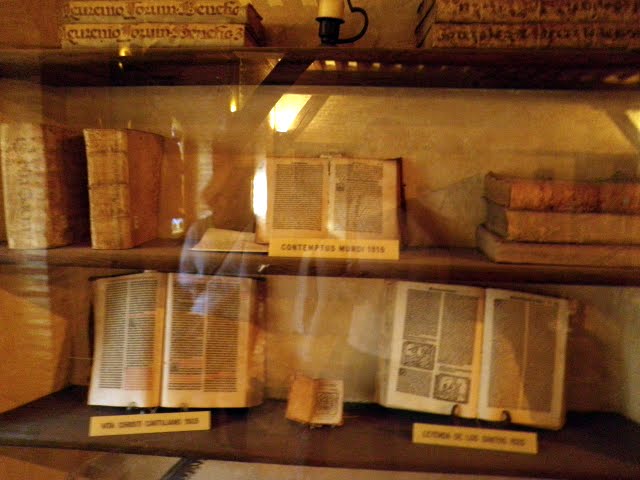
Before Ignatius was a saint, he was the Basque ideal: a soldier, a courtier, ambitious, proud, and supremely confident in his own capacity to shape his destiny. Then, at the siege of Pamplona in May 1521, a French cannonball shattered his leg. Carried home to Azpeitia to convalesce, he asked for the adventure novels befitting a man of his station — and was given instead the Life of Christ and a book of saints’ lives. He read them because there was nothing else.
During that bedridden season, he began to notice something. When he daydreamed about military glory and courtly conquest, he felt a rush of excitement — and then, afterward, a deep emptiness. But when he read about the saints and imagined following Christ, the feeling that remained was different: a quiet, lasting joy. This capacity to distinguish the spirit that lifts from the spirit that ultimately deflates became the foundation of all Ignatian spirituality — what he called discernment of spirits.
The Elhuyar brothers bent over their laboratory with the same God-given curiosity that Ignatius carried into prayer. The difference is what they did with the wonder. Ignatius let his wonder lead him all the way to the Source. The gospel invites Bergara’s intellectual culture to take the same final step.
In February 1522, healed and transformed, Ignatius left Loyola on pilgrimage. He passed through Arantzazu and spent the night in prayer at the sanctuary — the Lady of the Thorns watching over the wounded knight becoming a pilgrim of God. He then walked to Montserrat, laid his sword at the altar of the Black Madonna, and gave his rich clothing away. The proud Basque warrior was dead. Something new had begun.
Arantzazu and the Renewal of Art Under Oppression
Four centuries after Ignatius knelt at Arantzazu, the sanctuary would again become a site of defiant spiritual and cultural vitality. In the 1950s, under Franco’s dictatorship — when Basque language, culture, and identity were being systematically suppressed — the Franciscans commissioned a bold new basilica. They invited the greatest Basque artists of the age: sculptor Jorge Oteiza, Eduardo Chillida, Nestor Basterretxea.
Oteiza’s work on the façade was controversial and initially banned by Church authorities. For years, his 14 apostle figures stood unfinished by the roadside, abandoned — a parable of interrupted testimony. When the ban was finally lifted in 1968 and he completed the work, Oteiza described the fourteen limestone apostles as representing an open community, suspended in mid-air, empty — “in order to be filled with the Lord.”
In the darkness of post-war Basque cultural oppression, Arantzazu became a site of renewal — proof that the hunger for beauty, transcendence, and sacred expression survived both rationalism and Francoism. The arts that Peñaflorida had championed in the Royal Seminary of Bergara were now flowering in the mountain sanctuary, as acts of resistance and worship simultaneously.
Spiritual Wounds — Part 2
⚔ The Idol of the Educated Mind
Bergara’s intellectual heritage created a culture where faith is implicitly for the simple, and reason for the sophisticated. The gospel must be presented not as anti-intellectual but as the source and ground of all true knowing. Christ is the Logos — the Word through whom all things were made (John 1:3).
⚔ The Wound of Severed Wonder
The Elhuyar brothers’ curiosity was beautiful and God-given. When that curiosity is divorced from its Source, wonder collapses into mere technique. Every tungsten atom they isolated was singing the name of its Maker. The gospel restores wonder — the universe becomes a love letter, not merely a laboratory.
⚔ Peñaflorida’s Unfinished Legacy
He held faith and reason together, but the generations after him could not. Pray that God would raise up Basque believers like him — people of deep intellectual credibility who make faith compelling to Bergara’s educated culture.
⚔ Oteiza’s Empty Apostles
The image of apostles made deliberately empty, ‘to be filled with the Lord,’ is a profound metaphor for the Basque religious condition: the forms remain, but the living presence has drained away. The gospel offers what the empty stone figures long for: the actual indwelling Spirit of Christ.
✦ Gospel Bridge: ‘In the beginning was the Word… through him all things were made’ (John 1:1,3). Jesus is not the enemy of the mind; he is the mind’s true home. Ignatius of Loyola — scholar, soldier, saint — is Bergara’s greatest proof that Basque brilliance and Christian devotion are not opposites. They were always meant for each other.