
ETA, Violence, and the Wounded City
HISTORICAL & CULTURAL CONTEXT
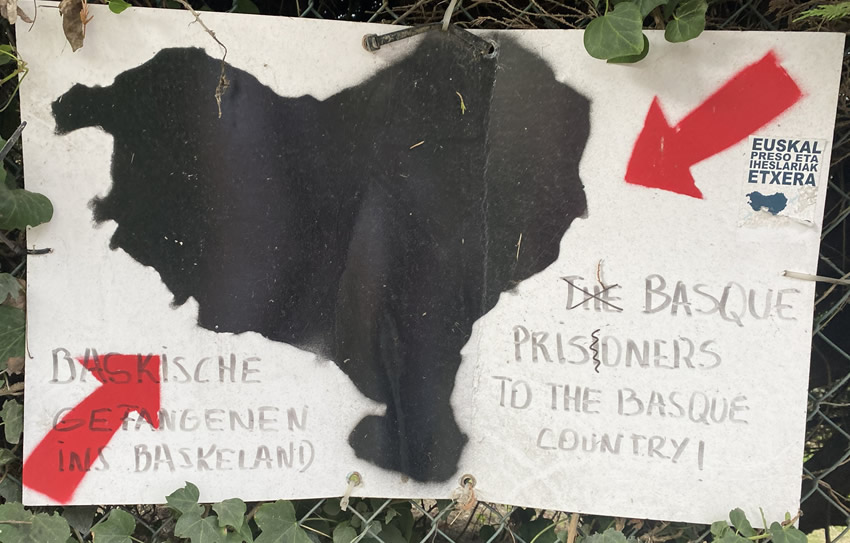
To speak of Donostia without speaking of ETA is to speak of a person without acknowledging their deepest scar. Between 1959 and 2011, the separatist organization ETA killed over 1,000 people — soldiers, police officers, politicians, judges, journalists, and civilians. It was the longest-running violent conflict in modern Western Europe, and Donostia was at the heart of it. Assassinations happened in its streets. Funerals were held in its churches. The conflict ran like a fault line through every family, every bar, every relationship.
What made the wound even deeper was the response of the Basque Church. Unlike the Catholic Church in Poland or Latin America, which often stood on the side of the persecuted, the Basque Church largely declined to condemn ETA — believing the political goals of the organization were legitimate, even if the methods were contested. Basque bishops did not attend the funerals of ETA’s victims. The Vatican later identified this failure as a root cause of the region’s rapid secularization: a Church that chose tribal solidarity over prophetic witness lost its moral voice — and then its congregation.
ETA declared a permanent ceasefire in 2011. The guns are silent. But the silence has its own weight. Victims’ families wait for apologies that have not come. Former members of ETA have returned to communities. The question of how a society heals when everyone was harmed — and almost everyone was, in some way, complicit — remains unanswered.
- ETA (Euskadi Ta Askatasuna) founded 1959; active armed campaign until 2011
- Over 1,000 people killed — military, police, politicians, civilians, and journalists
- Franco’s regime suppressed Basque language and culture — a genuine wound that helped fuel extremism
- Basque clergy largely declined to condemn ETA, identifying with Basque nationalist cause
- Bishops did not attend funerals of ETA victims — a moral failure with lasting consequence
- Rapid secularization in Basque Country partly attributed to the Church’s political compromise
- Even since the ceasefire, full reconciliation between victims and perpetrators remains unfinished
| KEY FIGURE The Victims and Their Families 1959–presentNo single figure represents this wound — it is distributed across a thousand families. A father murdered at a checkpoint. A judge killed by a car bomb. A child who grew up without a parent. And alongside them: the former militant who pulled the trigger and now lives in the same town as the family of the person he killed. The reconciliation processes that have begun in the Basque Country are among the most complex in modern Europe. They require something that politics cannot provide: a way to hold grief, name injustice, and still extend something toward the other — not forgetting, not excusing, but not being consumed by it either. |
| SPIRITUAL WOUND IDENTIFIED Unforgiven wounds and unhealed victims on all sides. A city that witnessed terrorism in its streets, moral compromise from its Church, and generational trauma passed down through families — producing a culture that has rejected religion as complicit in its pain. The wound is not just political; it is theological. People need someone to name the injustice, hold the grief, and offer a way through — one that is neither revenge nor silence. |
| GOSPEL BRIDGE The suffering servant of Isaiah 53 — Jesus, who is wounded by the powerful yet intercedes for them from the cross: ‘Father, forgive them, for they do not know what they do’ (Luke 23:34). The cross is the only place in history where justice and mercy actually meet — where wrong is not minimized, but neither does it have the final word. Donostia needs a theology of lament before it can hear a theology of grace. The God of the Psalms — who cries ‘How long, O Lord?’ — is a God who can be trusted with the city’s unanswered questions. |
KEY SCRIPTURES
Isaiah 53:3–5 He was despised and rejected… he took up our pain and bore our suffering.
Luke 23:34 Father, forgive them, for they do not know what they are doing.
Psalm 22:1–2 My God, my God, why have you forsaken me? Why are you so far from saving me?
Romans 12:19–21 Do not take revenge… overcome evil with good.
DISCUSSION QUESTIONS
- How does it feel to sit with this history? What emotions does the story of ETA and its victims stir in you?
- The Basque Church chose silence when it should have spoken. How does institutional moral failure affect ordinary people’s trust in God — and is that fair?
- Jesus cried out ‘My God, why have you forsaken me?’ from the cross. Why does it matter that God knows what it feels like to be abandoned?
- What would genuine reconciliation look like in Donostia — not just politically, but spiritually? What does it require that politics alone cannot provide?
- Is there something in your own life — a wound or a wrong — where you need the place where justice and mercy meet?