
Series: The City Named for a Saint
We began with a name.
Donostia. The city named for a saint. A martyr’s name embedded in the oldest language in Europe, spoken by a people no linguist has ever fully explained, carved above the door of a baroque basilica in a city most of the world visits for its food and its bay and its festivals — and almost no one visits for its faith.
We end in the same place we began: with a city that is, whether it knows it or not, still shaped by the story of Sebastian. Still gathering on his feast day. Still reaching, in iron and wine and drumbeats and ocean wind, toward something it cannot quite name.
What We Have Covered
Over four parts, we have walked the length of Donostia’s spiritual story.
We sat with the mystery of Basque origins — an ancient people, an unclassifiable language, a longing for belonging that runs deeper than any cultural pride can reach. And we found that the God who made the nations made this one, too — that their uniqueness has an author, and their longing has an answer.
We followed Ignatius of Loyola from a vain soldier’s bed in Azpeitia to one of the most significant spiritual conversions in the history of the Church — and traced what happened when the institution he built forgot the encounter that produced it. A Church that became a political voice stopped being a spiritual one. And the people, quietly, left.
We refused to look away from the violence — ETA’s fifty-year campaign, the thousand people killed, the Church’s moral failure, the wounds that a ceasefire did not heal. We held that history with the seriousness it demands, and pointed to the only theology capable of meeting it: the cross, where justice and mercy actually meet, where the God who cries “Why have you forsaken me?” proves that no abandonment is beyond reach.
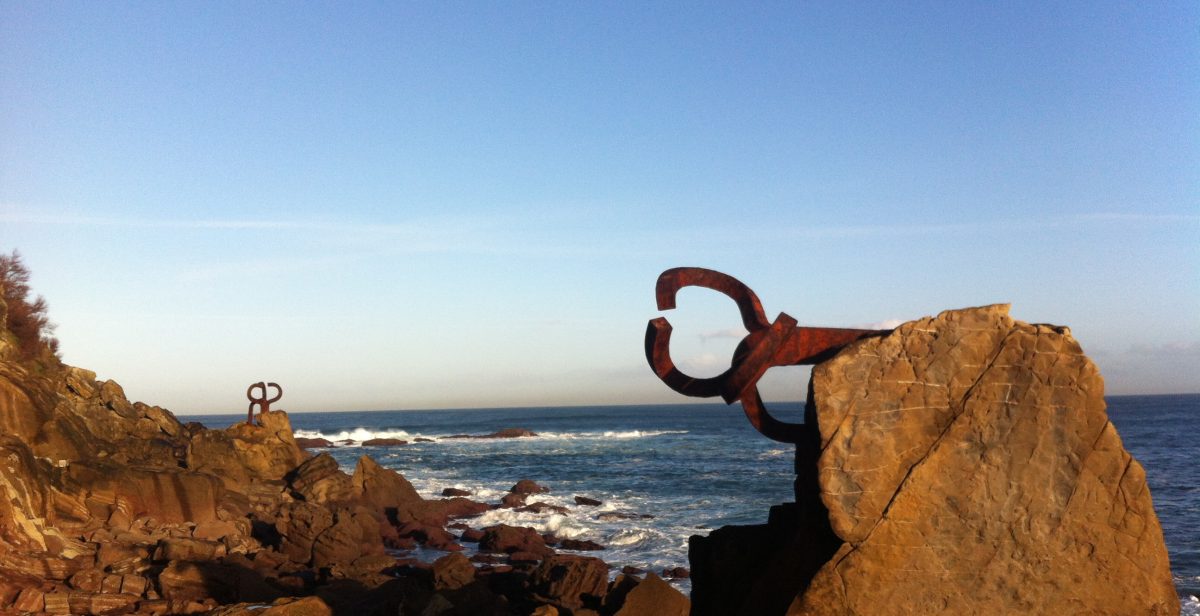
And we sat with the city as it is today — beautiful, prosperous, secular, thirsty. We found the Gospel not in condemnation of its culture but woven through it: in the table, in the festivals, in the sculptor who spent his life reaching into empty space, in the Woman at the Well who had tried everything the world offered and was still thirsty when Jesus arrived.
What Has Not Changed
The statue of Christ on Monte Urgull has been watching Donostia for generations. He is despised by Basque people when seen as the Jesus framed by Franco. Still waiting to be introduced as the Jesus framed by the Psalms and apostles as the Good shepherd.
He watched the city burn in 1813 and be rebuilt. He watched the Carlist Wars. He watched the summer courts of Spanish royalty arrive and depart. He watched the years of ETA’s violence and the long silence that followed. He watches the Tamborrada every January 20th — the feast of his martyr — as tens of thousands drum through the night in an ecstasy that is religious in everything but name.
He is still watching.
Not as a monument watches — without eyes, without interest, without care. As a person watches. Present. Patient. Waiting to be recognised.
The Gospel has never left Donostia. It is in the city’s name. It is in the conversion story of its greatest son. It is in the cross that stands at the summit of the hill above the bay. The question has never been whether Jesus is present here. The question is whether the people of this city — and those called to serve among them — will look up long enough to see it.
A Word for Those Doing This Work
If you are reading this as someone engaged in Gospel ministry among Basque people — in Donostia, in the wider Basque Country, or in diaspora communities — we want to say this clearly:
The soil is not as hard as it looks.
What looks like indifference is often unresolved grief. What looks like secularism is often displaced longing. What looks like hostility to religion is often a legitimate response to a Church that failed — not to Jesus, but to a Jesus-shaped institution that stopped pointing beyond itself.
The people of Donostia are not hostile to the questions. They are asking them every night, in the bars of the Parte Vieja, in the festivals that keep running long after their original meaning has been forgotten, in the art that reaches into the void looking for what lies between things.
Enter those conversations humbly. Honour the history. Sit with the grief before you offer the hope. Trust that the God who made this people before anyone else could explain them is the same God who is at work among them now — patient, present, and entirely unafraid of everything this city has been through.
The door is still open. It has always been open. It is open now.
The Full Series
- Introduction: The City Named for a Saint — Introducing the Series
- Part 1: Roots of an Ancient People — Identity, Language, and the Mystery of Origin
- Part 2: Faith, Fire, and Conquest — The Church, Ignatius of Loyola, and Spiritual Ambition
- Part 3: Blood, Division, and the Long Shadow — ETA, Violence, and the Wounded City
- Part 4: Beautiful Shell, Empty Center — Secularism, Longing, and the Open Door
Thank you for reading. If this series has been useful to you — for personal study, for group discussion, or for your ministry among Basque people — we would love to hear from you. And if you know someone who needs to encounter Jesus through the story of this city, share it with them. That is, after all, how the Gospel has always traveled: one person, one story, one city at a time.
About Joy Ministries We exist to bring the joy of the Gospel to every people and place. This series is part of our ongoing work of culturally rooted evangelism — taking the story of a city seriously, so that the people of that city might take the story of Jesus seriously too. Visit us at joyministries.net.