
The Church, Ignatius of Loyola, and Spiritual Ambition
HISTORICAL & CULTURAL CONTEXT
No figure from the Basque Country has shaped world history as profoundly as Ignatius of Loyola — born in 1491 at the castle of Loyola in Azpeitia, just sixteen miles southwest of Donostia. He grew up with the same Basque blood, the same fierce pride, the same mountains. And yet everything that made him Basque became raw material for one of the most dramatic spiritual conversions in church history.
Donostia’s own religious heritage is written in stone. The Gothic Church of San Vicente (1507), the Baroque Basilica of Santa María (1743–64), and the former Dominican convent of San Telmo (1531) speak to centuries of deep Catholic devotion. The city was burned and rebuilt multiple times — by the French in 1813, through the Carlist Wars — and each time its churches were among the first things restored. Faith was bone-deep in this city. The question is what has happened to it since.
- Ignatius of Loyola born 1491 in Azpeitia, Gipuzkoa — 16 miles from Donostia
- A vain, ambitious soldier who desired fame, glory, and the love of a great lady
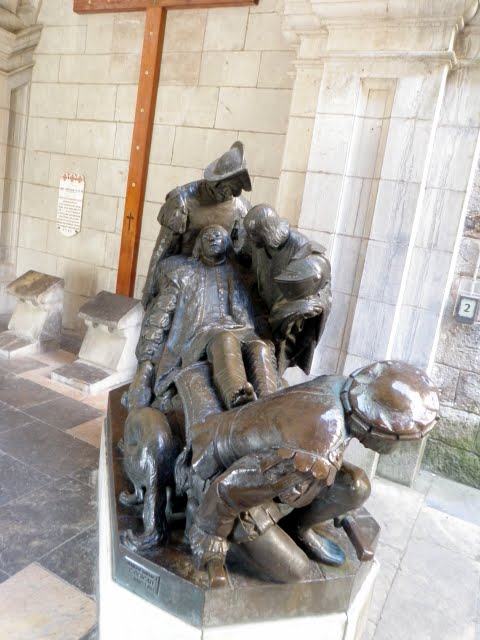
- Wounded by a cannonball at the Battle of Pamplona, May 20, 1521 — his military career ended in an instant
- During his recovery, reading the lives of Christ and the saints, he experienced his conversion
- Founded the Society of Jesus (Jesuits) — one of the most globally significant missionary orders in history
- Donostia burned to the ground in 1813 by allied British/Portuguese troops — rebuilt on the same streets
| KEY FIGURE Ignatius of Loyola 1491–1556A Basque soldier whose cannonball wound forced him to lie still long enough to hear God. During his convalescence, having read the Gospels and the lives of the saints, he noticed something: when he imagined worldly conquests, the pleasure faded quickly; when he imagined following Christ, the joy remained. This observation — that different desires leave different spiritual traces — became the foundation of the Spiritual Exercises, which have guided the interior lives of millions. He founded the Jesuits and was declared patron saint of all spiritual retreats. His story begins not with virtue but with vanity, and not with mission but with a broken leg. |
| SPIRITUAL WOUND IDENTIFIED Religion entangled with power and identity. The Basque Church historically fused faith with nationalism — at a certain point, a significant portion of the clergy became deeply nationalistic, making faith a cultural marker rather than a living encounter. Beautiful churches remained standing while the interior fire went out. Institutional religion without personal transformation is a shell — and Donostia’s population has largely walked away from the shell. |
| GOSPEL BRIDGE The conversion of Ignatius: Jesus does not come to the powerful in their glory — He comes to the broken in their beds. Ignatius was not converted by an argument or a program; he was converted by silence, by reading, and by paying attention to what his heart was actually doing. The same Jesus who met a wounded Basque soldier in a sickbed is not locked in institutional buildings. True transformation cannot be produced by cultural Christianity (John 3:1–8). Nicodemus was the most religious man in Jerusalem — and Jesus told him he needed to be born again. |
KEY SCRIPTURES
John 3:1–8 You must be born again… The wind blows where it wishes — so it is with everyone born of the Spirit.
Philippians 3:7–8 Whatever was gain to me I now consider loss for the sake of Christ.
2 Corinthians 12:9 My power is made perfect in weakness.
DISCUSSION QUESTIONS
- Ignatius wanted fame, women, and conquest. What was it that finally got his attention — and why a broken leg rather than a religious argument?
- He noticed that some desires left him feeling empty afterward and others left a lasting joy. Have you ever paid attention to that in your own life?
- The Basque Church became so identified with nationalism that it lost its evangelistic voice. How can faith become a cultural identity marker rather than a living relationship? Have you seen that happen?
- What would it look like in Donostia today for people to encounter Jesus the way Ignatius did — not through an institution, but through a personal, transforming meeting?