
Secularism, Longing, and the Open Door
HISTORICAL & CULTURAL CONTEXT
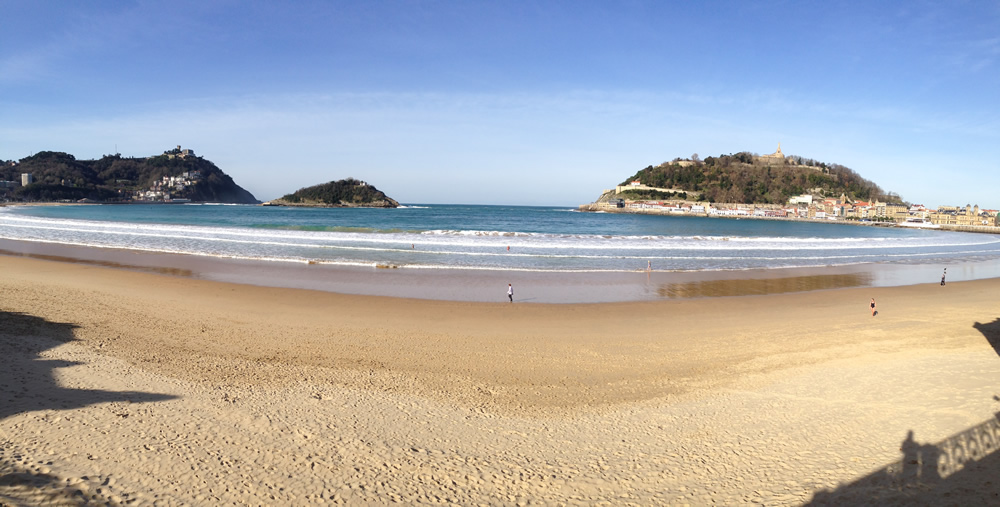
Stand on the promenade of La Concha at dusk. The bay curves like a perfect crescent, the hills are green, the old town glows amber, and somewhere above it all the statue of Christ on Monte Urgull looks out over a city that has largely stopped looking back. Donostia is consistently ranked among the most beautiful cities in Europe, one of the world’s top ten food destinations, and one of Spain’s most prosperous urban areas. It has everything — and that, precisely, is the problem.
The churches that once defined public life in Donostia stand architecturally magnificent and increasingly empty. The Basque Country has experienced one of the most rapid secularizations in the Catholic world — a process accelerated by the Church’s moral failures during the ETA years, but running deeper than any single cause. What has not disappeared is the hunger for community, transcendence, beauty, and meaning. That hunger has simply been redirected.
Food has become the city’s primary communal liturgy. The pintxo bars of the old town are not merely restaurants — they are spaces of ritual gathering, generous sharing, and fierce pride. The Tamborrada festival on January 20 — the feast of Saint Sebastian — fills the streets with thousands of drummers who may not know or care who Sebastian was, but who drum through the night in an ecstasy that looks, to outside eyes, unmistakably religious. Eduardo Chillida’s Peine del Viento (‘Comb of the Wind’), anchored in the rocks at the edge of the bay, reaches out into the ocean’s void — the work of a man who said he spent his life searching for what lies between things.
- Donostia consistently ranked among Europe’s most beautiful cities and top global food destinations
- Basque Country among the most rapidly secularized regions in the Catholic world
- Pintxo culture as communal liturgy: ritual, sharing, beauty, and fierce local pride
- Tamborrada (January 20, feast of Saint Sebastian) — all-night drumming festival of thousands
- Eduardo Chillida (1924–2002): sculptor who spent his life exploring empty space and what lies between things
- The Cathedral of the Good Shepherd stands at the heart of the city — its doors still open
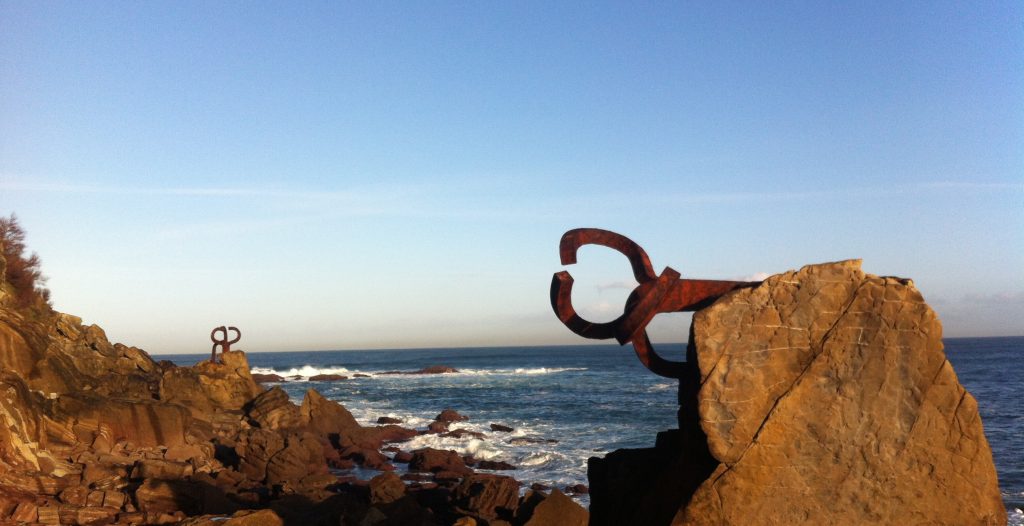
| KEY FIGURE Eduardo Chillida 1924–2002, Donostiarra Chillida was born in Donostia and remained rooted in the Basque landscape throughout his life. His monumental sculptures — often in iron and steel, often reaching into void or resisting gravity — are meditations on emptiness, limit, and the space between solid things. The Peine del Viento, embedded in the rocks at the western end of La Concha, reaches its metal fingers into the Atlantic wind. Chillida said: ‘I spend my life looking for what I cannot see.’ He never claimed to be searching for God. But his art articulates what his city cannot quite name: a longing for something beyond the beautiful surfaces of things, something that the ocean wind keeps pointing toward without arriving. |
| SPIRITUAL WOUND IDENTIFIED Abundance without meaning; beauty without transcendence. A post-Christian culture that has retained the festivals, the communal meals, and the sacred architecture — but emptied them of their source. The longing for the sacred has not disappeared; it has been displaced onto food, identity, and aesthetics. The wound is a beautiful one: a city shaped like a shell, open and curved — and waiting, without knowing it, to be filled. |
| GOSPEL BRIDGE Jesus at the table. The feeding of the five thousand. The wedding at Cana. The Last Supper. The risen Jesus making breakfast on the beach (John 21). Jesus did not despise the table — He sanctified it. The pintxo bar may be the most natural place in Donostia to begin a gospel conversation. The Woman at the Well (John 4) is Donostia: beautiful rituals, deep community, and still thirsty. ‘Whoever drinks of this water will thirst again — but whoever drinks of the water I will give will never thirst.’ The statue of Christ on Monte Urgull has been watching this city for generations. He is not a monument. He is a person. And He is still present. |
KEY SCRIPTURES
John 4:13–14 Whoever drinks of this water will thirst again — but the water I give will become a spring welling up to eternal life.
John 21:9–13 When they landed, they saw a fire of burning coals there with fish on it, and some bread. Jesus said, ‘Come and have breakfast.’
Revelation 21:5 Behold, I am making all things new.
Psalm 107:9 He satisfies the thirsty and fills the hungry with good things.
DISCUSSION QUESTIONS
- Donostia is stunning — the food, the bay, the architecture, the festivals. What does it feel like to live in a place of such beauty that still leaves people hungry for something more?
- Chillida said he spent his life looking for what he couldn’t see. Have you ever felt that — a search for something beyond what’s visible?
- The Tamborrada drums all night on the feast of Saint Sebastian without most participants knowing who Sebastian was. What do you think they’re actually looking for in that experience?
- Jesus keeps showing up around meals. Why might that be particularly relevant for Donostia and Basque culture?
- If you were going to have an honest conversation about Jesus with someone in a pintxo bar in the old town — what would you actually say? Where would you start?